
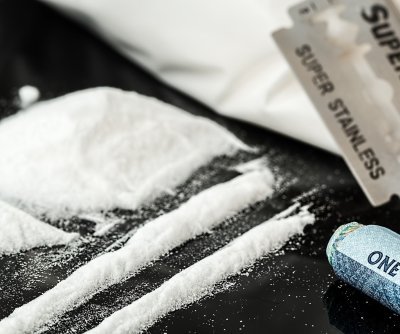
Fentanyl’s most alarming aspect is its low cost and high potency, which often leads to its use in mixing with other drugs.
Whether it’s heroin, cocaine, methamphetamine, or counterfeit pills resembling prescription opioids like Vicodin or OxyContin, fentanyl is frequently added to boost the strength of illicit substances, often without the user’s knowledge. This hidden presence significantly raises the risk of accidental overdose, as individuals may consume what they think is a familiar drug, only to face the peril of a potentially lethal dose of fentanyl.
Data from the CDC indicates that synthetic opioids, primarily fentanyl, are now responsible for 7 out of 10 overdose deaths in the U.S., contributing to a dramatic rise in drug-related fatalities over the past decade.
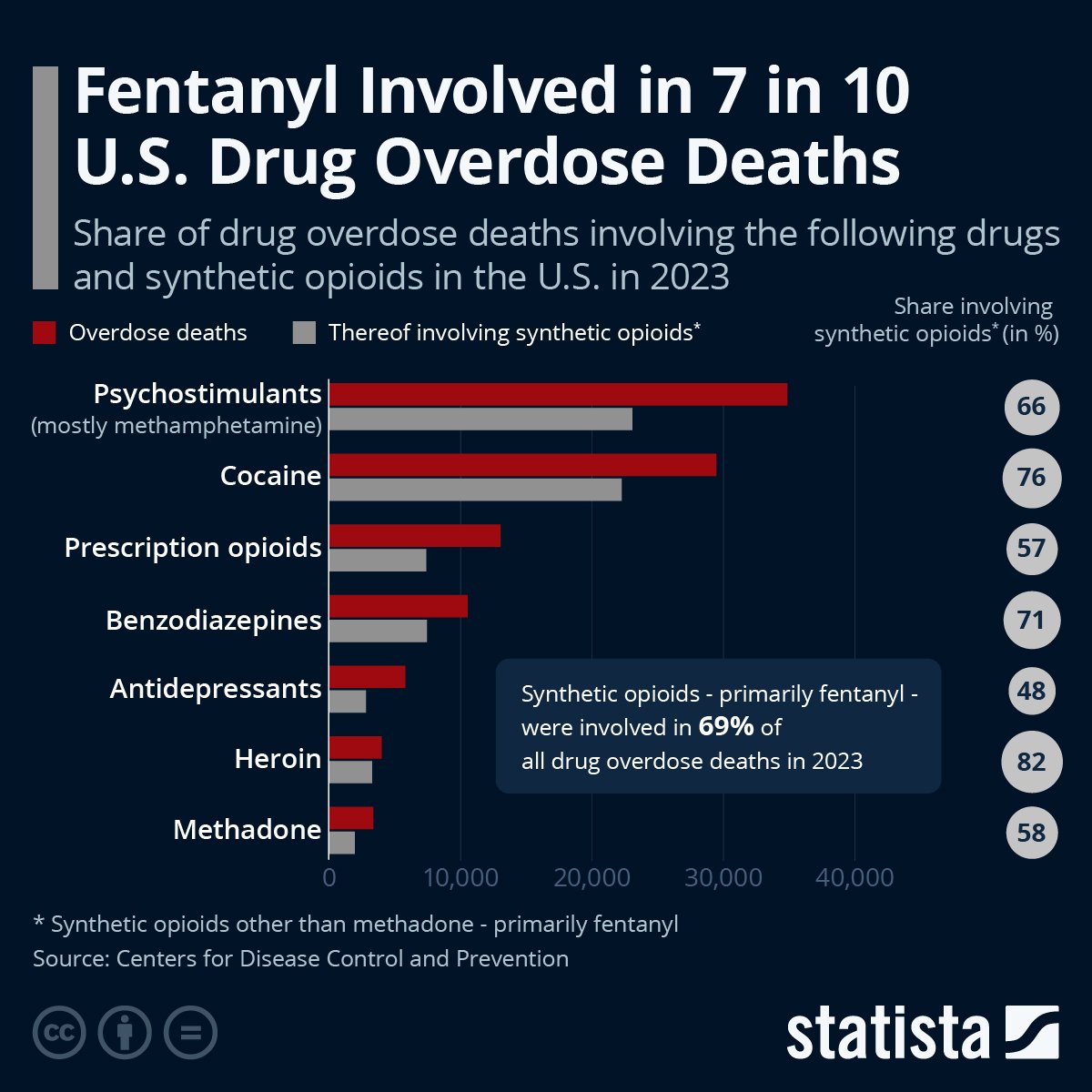
This often concealed presence of fentanyl has also led to a sharp increase in overdose deaths involving cocaine and methamphetamine, with fentanyl now accounting for 76% of cocaine overdose deaths and 66% of those involving meth or other psychostimulants.
From 2013 to 2023, overdose deaths linked to cocaine surged sixfold, rising from fewer than 5,000 to nearly 30,000, a trend almost entirely fueled by fentanyl’s rise. A similar pattern is evident for meth and other psychostimulants, which were involved in 35,000 overdose deaths in 2023, compared to just 3,600 a decade earlier.
The latest CDC data clearly illustrates the dangers posed by fentanyl. Its extreme potency transforms the use of other drugs into a deadly gamble.


