
Gold prices have surged to record highs, driven by geopolitical tensions, economic uncertainty, and ongoing purchases by central banks. This month, the price of gold climbed nearly 60% this year, surpassing the $4,000-per-ounce mark (average closing price from October 1 to 27) before stabilizing around that level.
This surge in demand has raised concerns about the sustainability of gold reserves and whether we have hit “peak gold.” Some analysts suggest that global mining production may have plateaued, remaining stagnant between 3,000 and 3,300 metric tons annually over the past decade.
So, which mines are leading in gold production each year?
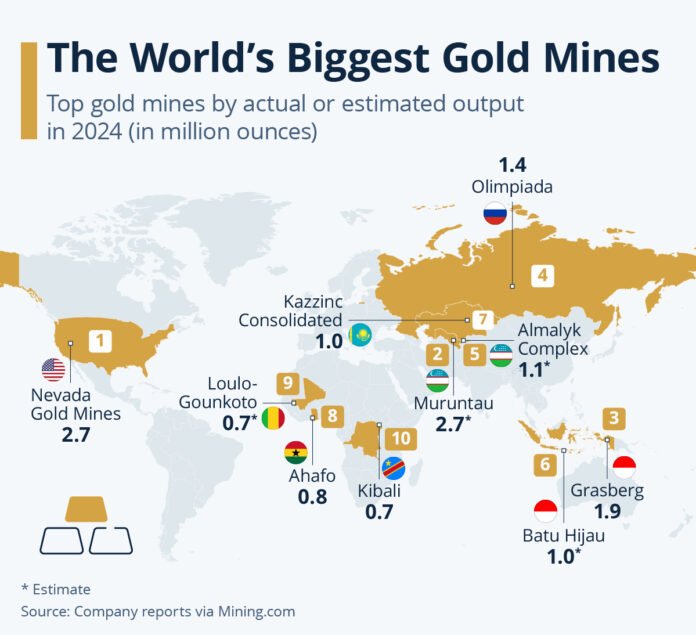
According to Statista’s Tristan Gaudiat, based on data from Mining.com, gold mines in Nevada produced 2.70 million ounces (76.5 metric tons) in 2024. This output is comparable to that of the Muruntau gold deposit in Uzbekistan, which produced approximately 2.68 million ounces that same year and has been in operation since the late 1960s.
The Grasberg gold mine in Indonesia’s West Papua province, discovered in the 1980s, ranks as the world’s third-largest supplier, yielding 1.86 million ounces (59 tons) in 2024. Following closely is the Olimpiada deposit in Russia, discovered in 1975, which produced 1.44 million ounces (40 tons).


