
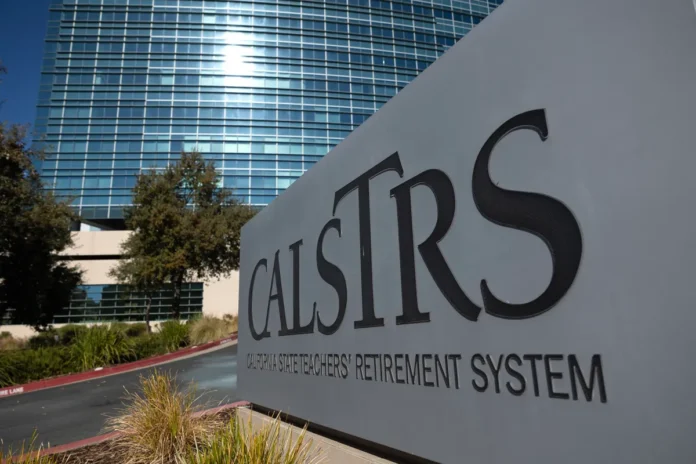
The California Public Employees’ Retirement System (CalPERS) has reported a staggering 71% loss on its $468 million investment in a clean-energy and technology private equity fund, yet it remains tight-lipped about the reasons behind this downturn. This situation has raised significant concerns regarding the pension fund’s private equity strategy, which relies on complex, illiquid investments that ultimately place the financial burden on taxpayers.
State records reviewed by the Center Square reveal that the CalPERS Clean Energy & Technology Fund (CETF), launched in 2007, has plummeted in value from an initial commitment of $468.4 million to just $138 million as of March 31, 2025. This translates to a loss exceeding $330 million, even after accounting for $22 million in fees paid to private equity managers.
For the fiscal year 2024–2025, CalPERS recorded overall returns of 11.6%, with public equities yielding 16.8% compared to private equity’s 14.3%. The similar performance between these asset classes has sparked questions about the worthiness of the complexities and costs associated with private equity investments.
“If public markets provide these kinds of returns, why complicate matters with the illiquidity of private equity?” asked Marc Joffe, a public finance expert and visiting fellow at the California Policy Center, in an interview with the Center Square. He pointed out that the CETF losses highlight the risks associated with private equity and ESG investments, suggesting that CalPERS would benefit from focusing on a diverse portfolio of publicly traded equities for better long-term returns.
A Fund Born in the Green Boom
CalPERS established CETF during the early years of the Obama administration, a time when billions flowed into clean-energy projects. Reports indicate that the fund was managed by Capital Dynamics, which concentrated on U.S. solar energy initiatives. The firm’s then-managing director, Benoit Scaysbrook, defended this narrow focus, favoring specialization in solar over a broader renewable approach. However, many solar ventures from that period faltered due to competition from low-cost Chinese producers. A Capital Dynamics-sponsored book later noted that once-prominent firms like Evergreen Solar struggled to compete.
The most notorious failure of this clean energy surge, Solyndra, resulted in over $500 million in losses for taxpayers when its government-backed factory ceased operations.
CalPERS Adjusts Its Strategy
CalPERS spokesman Abram Arredondo stated that CETF was established before the fund adopted its current investment strategy. “The CalPERS Clean Energy & Technology Fund dates back to 2007, prior to the pension fund’s board and staff refining our private equity approach,” he remarked.
Arredondo emphasized that CalPERS has since diversified its investments, chosen higher-performing asset managers, and reduced fees through co-investments. “Since 2022, we have cut fees by 10%. The private equity class has been our top performer for the last 20 years, and we believe our members should have access to its income-generating opportunities,” he added.
Pension Gaps and Public Exposure
Despite these reassurances, CalPERS remains only 79% funded, with $180 billion in unfunded liabilities, according to estimates from the Reason Foundation. This funding gap places California taxpayers in a position of indirect responsibility for any shortfall.
To address these issues, CalPERS has increased its private equity allocation from 7% in 2021 to 17% in 2024, despite the less transparent valuations of private holdings, which rely on internal assessments rather than market prices. Private equity managers typically charge fees based on assets managed and a percentage of profits beyond a certain threshold. These fees, estimated to cost CalPERS 6-7% annually, necessitate that private equity investments significantly outperform the broader market to justify the elevated risks.
Calls for Transparency
When the Center Square requested public records detailing the CETF’s investments and management contracts, CalPERS declined, citing state law exemptions for alternative investments. “The public should have a right to know how public money is being invested,” stated David Loy, legal director for the First Amendment Coalition, emphasizing the need for transparency in pension fund investments.
The Cost of a Poor Investment
Had CalPERS opted to invest the CETF funds in an S&P 500 index fund with reinvested dividends, the value today would be approximately $3 billion. This disparity illustrates the long-term effects of compounded losses, which erode the capital available for future investments, complicating recovery efforts. Pension managers typically prioritize risk management over pursuing high returns, with consistent, moderate performance often outperforming more volatile options over time.


