
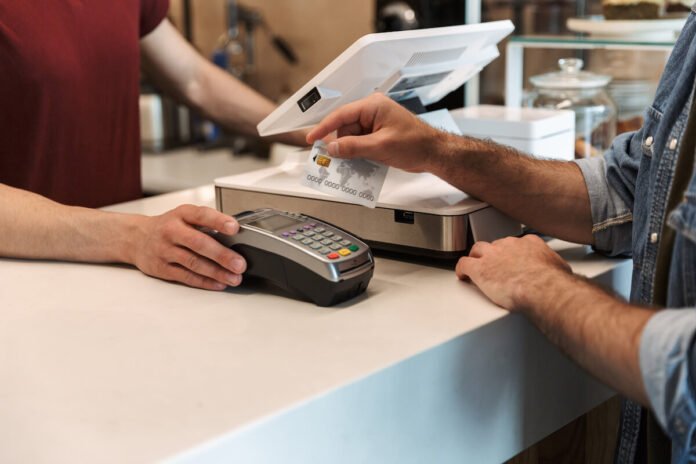
A handful of credit card companies are stifling competition and putting financial pressure on small businesses with high interchange fees, according to a report by The New York Times (NYT). These fees, known as “swipe fees,” are charged to businesses each time a customer uses a credit card to make a purchase, and they are becoming increasingly burdensome for small business owners.
Mastercard and Visa dominate this market, controlling over 80% of card transactions, as reported by NYT. As cash usage declines, small businesses face rising swipe fees, which are driving up costs for consumers. In 2023, U.S. merchants paid a total of $172 billion in processing fees, an increase from $160.66 billion in 2022, according to the Nilson Report. Small businesses, which employ about 46% of American workers—roughly 59 million people—also contribute 43.5% to the U.S. gross domestic product, according to the Office of Advocacy.
“There is no room to pay more—we’re just operating so thin,” said Patti Riordan, owner of a hobby shop in Lancaster, Ohio, in her conversation with NYT.
For many small businesses, credit and debit card fees rank among their top monthly expenses. Swipe fees typically range from 2% to 3% of each transaction, as explained by the National Association of Convenience Stores (NACS). Retailers face even higher fees for premium reward cards.
Credit card companies assert that the fees help fund security measures such as fraud protection. “It’s very expensive to issue a product and provide payment guarantees and online customer service—zero liability. All of those things, and many more, senator, get factored into interchange fees,” claimed Bill Sheedy, a senior advisor to Visa CEO Ryan McInerney.
The small business uncertainty index, which gauges how small business owners feel about the economy’s future, rose seven points to 110 in October—the highest level recorded, according to the National Federation of Independent Business. Many small businesses are still grappling with the long-term effects of the COVID-19 pandemic, which severely impacted their operations.


