
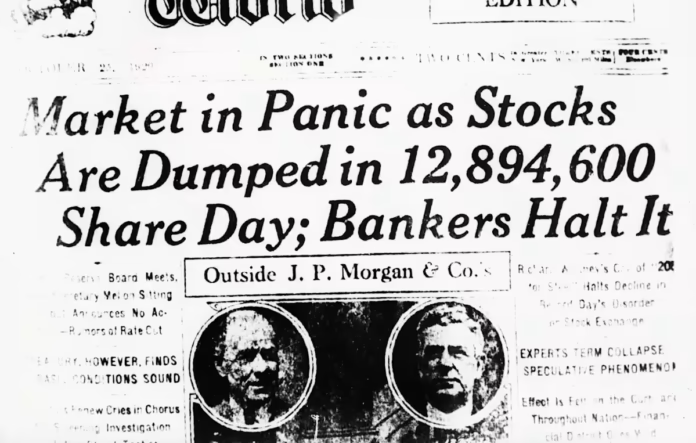
It feels reminiscent of the past, but not in a reassuring way. Financial experts globally are cautioning about a potential market crash akin to the 1929 collapse, fueled by trade wars, soaring national debts, and rampant overbuilding in the AI sector.
“We will face a crash,” said financial journalist Andrew Ross Sorkin in a CBS News interview. He’s promoting his new book, 1929: Inside the Greatest Crash in Wall Street History — and How It Shattered a Nation, which details the market collapse that ignited the Great Depression. Other voices are raising alarms as well.
G20 risk watchdog Andrew Bailey warned on Monday that world markets are “vulnerable to a disorderly adjustment” due to economic and political uncertainties, according to Reuters. Last week, Bank of England officials cautioned that the AI bubble driving tech stocks might soon burst, as noted by CNBC. JP Morgan CEO Jamie Dimon echoed concerns about a “major market correction,” reported Fortune. “Buckle up,” said Kristalina Georgieva, chief of the International Monetary Fund, “uncertainty is the new normal and it’s here to stay.”
Echoes of 1929?
The 1929 crash is considered the “definitive stock-market collapse,” according to David Champion at Harvard Business Review. The 1920s were marked by trade protectionism, anti-immigrant sentiment, and emerging technologies disrupting “traditional livelihoods.” The key question remains: Have finance executives truly learned from history? The parallels to the economic landscape of 1929 are striking. “Once you start looking for similarities, you see them everywhere.”
“The numbers just don’t add up” concerning AI investments, journalist Derek Thompson pointed out in his newsletter. Tech companies are projected to spend $400 billion on artificial intelligence this year—more, when adjusted for inflation, than was spent on the entire Apollo moon program over a decade. Yet, it remains “unclear” if these companies are “ready to recoup those investments.”
American consumers currently spend only $12 billion annually on AI services. Still, investors continue to pour money into tech, which appears to be an “obvious economic bubble.” Bubbles burst, and “none of the typical rules for sensible investing can clarify what’s happening with stock prices right now.”
Scary, but Rare
While tech firms may be overinvesting in AI, that doesn’t necessarily mean investors should fret about a “contagion across the broader economy,” Axios reported. The surge in tech investment is driven by “large, stable companies with the balance sheets to support their expenditures.”
Observers might be overreacting to the signs of trouble. Bubble bursts are “memorable. They are colorful. They are scary,” said economic analyst William Goetzmann at The Wall Street Journal.
However, bubbles are also “far rarer than what the public imagines.” Since 1887, the Dow Jones Industrial Average has dropped 10% in a single day only four times, with two of those instances occurring in 1929. Yet investors consistently anticipate the next disaster, often estimating the odds of an imminent crash at 10% to 20%, which is “significantly higher than historical data suggests.”


