

By Breck Dumas
A lot of the problems with the health insurance industry are a ‘direct result of Obamacare,’ expert says
The callous and even mocking reactions on social media to the cold-blooded murder of UnitedHealth CEO Brian Thompson last week serve as further evidence that many Americans’ frustrations with the health insurance industry are boiling over.
But some experts say the government, not health insurance companies, deserves much of the blame.
“There is a very large reserve of untapped frustration with health insurance and the hassle and high cost of care, and this event sort of tapped into that accidentally,” says Dean Clancy, senior health policy fellow at Americans for Prosperity (AFP). “The murder is, of course, horrible, but it is good that policymakers are waking up to just how frustrated people are.”
In an interview with media, Clancy said a lot of the problems with the industry are a direct result of the 2010 Affordable Care Act, former President Obama’s signature legislation known as Obamacare, which Clancy said “turned the health insurance industry into basically a massive recipient of taxpayer subsidies.”
 Clancy argues that health insurers have been the most profitable companies in America for basically the past decade, directly as a result of Obamacare, yet people haven’t seen a corresponding improvement in the quality of care or their ability to access it quickly and conveniently.
He says that before Obamacare, health care was a sore point, but nothing like it has been in the wake of the legislation.
So what’s changed?
“First of all,” Clancy said, “all kinds of federal rules and mandates and price controls that have changed insured behavior so that they are constantly increasing their prices and shrinking people’s access to doctors and hospitals.”
Clancy said that is one of the little known effects of Obamacare, and it’s called “network shrinkage.” Basically, the insurers are incentivized to have as few doctors and hospitals in their health plan as possible, and so people are having to drive further for an appointment, and wait longer for care.
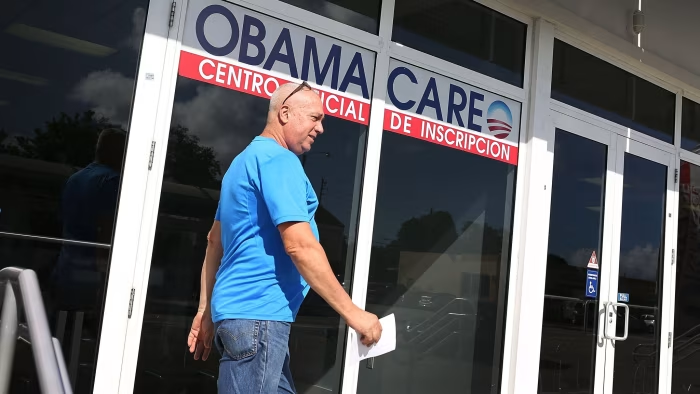
Clancy acknowledges that the health care system was not perfect prior to Obamacare, but says at least patients could get insurance that was affordable and portable and that was tailored to their needs, and now that is much harder.
Also under Obamacare, taxpayers are now on the hook to transfer hundreds of billions of dollars a year directly to insurance companies, and taxpayers are paying for that, and we’re hoping that some health care trickles down to patients, Clancy said. He believes it would make a lot more sense and be more affordable if those funds were under the control of the patients directly, rather than shipping them to insurance companies.
“People need insurance and we should have a safety net so that everybody has access to care when they need it,” Clancy told media. “But these lavish subsidies are really just padding the bottom line of the health insurers without corresponding benefit for patients.”
Clancy said one way to fund patients rather than insurance companies is by directing some of the money currently being spent on Obamacare subsidies and Medicaid and putting it directly into the Health Savings Accounts of patients to let them decide how to spend that money. He said that would bet more efficient, give the patient more choice and control, and everybody’s better off.
AFP’s stance is that markets work in health care when you let them. Clancy said there is real-world evidence, pointing to the fact that the cost of Lasik surgery has never been paid for by insurance, yet the price of the procedure is constantly falling and the quality is constantly improving. Same with cosmetic surgery.
He said people are better shoppers when they’re using their own money. And while there needs to be safety nets and guardrails and people do need health insurance, it should be insurance that’s tailored to patients’ needs, rather than the current one-size-fits-all approach that he says has proven to be very expensive and inflationary.


